TL;DR: ECFMG requires a complete, word for word translation of medical diplomas and transcripts, prepared only by a government official, a medical school official, or a professional translation service. Self translation is not permitted under any circumstances.
If you trained as a physician outside the United States and are working toward practicing here, ECFMG certification is very likely one of the milestones standing between you and that goal. Part of that process, for most international medical graduates, means submitting an official English translation of your medical diploma, transcripts, and related credentials, and ECFMG’s requirements around exactly how that translation needs to be prepared are more specific and stricter than most other credentialing translation standards you may have already encountered.
This guide walks through what ECFMG certification actually is, which documents typically need translation, and the specific rules ECFMG applies to who can prepare that translation, how it needs to be formatted, and what happens if it does not meet the standard.
What Is ECFMG Certification?
ECFMG, the Educational Commission for Foreign Medical Graduates, certifies that an international medical graduate meets the educational and credentialing standards expected of physicians trained outside the United States who want to enter US graduate medical education or pursue licensure in this country. ECFMG certification is a prerequisite for taking Step 3 of the United States Medical Licensing Examination and for entering most residency and fellowship programs accredited by the Accreditation Council for Graduate Medical Education.
Before ECFMG can certify a foreign medical graduate, it needs to verify the underlying credentials that graduate is presenting: the medical diploma itself, academic transcripts documenting the course of study, and often additional supporting documents depending on the specific pathway. When any of those original documents are not in English, an official translation is required before ECFMG will process them.
Unlike some other standards covered across our guides, ECFMG’s rule on self-translation is not a soft discouragement. Applicants are explicitly not permitted to translate their own documents for ECFMG purposes, full stop, regardless of how fluent they are in both languages. This is stricter than the USCIS approach, where self-translation is technically allowed but discouraged, and it means the question of whether to hire an independent translator is not really a judgment call for an ECFMG applicant the way it can be for some other filings.
If your medical school does not provide an acceptable English translation of your credential itself, ECFMG’s own process has a fallback: it will have the credential translated into English by an independent translation service on its own end. This is a safety net for that specific situation, not a general substitute for arranging your own translation, and applicants should not assume ECFMG will handle translation for documents beyond what a medical school directly submits.
Which Documents ECFMG Requires Translated
The most common documents requiring translation are the final medical diploma and the full academic transcript from medical school, since these form the core of what ECFMG is verifying. Depending on individual circumstances, additional documents like internship or residency completion certificates, medical council registration certificates, or name change documentation may also need translation if they were issued in a language other than English.
ECFMG’s own guidance is direct on this point: any document submitted to ECFMG that is not in English must be accompanied by an official English translation that meets ECFMG’s specific translation requirements, and the original-language document must be submitted alongside the translation, not in place of it. A translation without the accompanying original document, or an original document without its translation, will not be accepted on its own.
ECFMG Translation Requirements Explained
ECFMG’s standard is narrower and more specific than what USCIS or UKVI ask for, and it is worth understanding exactly where the differences lie, since a translation that fully satisfies a general immigration standard may not automatically satisfy ECFMG’s requirements.
Who is allowed to prepare the translation. ECFMG’s requirements specify that the translation must be prepared by one of three categories: a government official, such as a Consular Officer; a medical school official, such as a Dean or Registrar at the institution that issued the original document; or a professional translation service. This is a considerably narrower list than USCIS’s standard, which accepts any competent bilingual translator regardless of professional affiliation or institutional connection.
The translation must be complete and word-for-word. ECFMG explicitly states that a summarized or abstract translation is not acceptable, and the translation must be prepared directly from the original document or a photocopy of the original, not from a transcribed or retyped version of it. A translation prepared from a transcription, rather than the original document itself, will not be accepted under any circumstances, regardless of how accurate that transcription might otherwise be.
Formatting and certification requirements. According to ECFMG’s published requirements, the translation must appear on letterhead, bear the signature and title of the government official, medical school official, or representative of the translation service who prepared it, and include that party’s seal if one exists. The 2026 ECFMG Information Booklet restates this same standard as part of the broader certification process documentation, confirming it is current and consistently applied.
ECFMG Translation Requirements vs. a General Immigration Standard
| ECFMG | General immigration standard (e.g. USCIS) | |
|---|---|---|
| Who can translate | Government official, medical school official, or professional translation service | Any competent bilingual translator |
| Self-translation | Explicitly not permitted | Technically allowed, though discouraged |
| Word-for-word requirement | Explicitly required | “Complete and accurate,” similar in practice |
| Format | Must appear on letterhead with signature, title, and seal if available | No specific format mandated |
| Original document required alongside translation | Yes | Yes |
A related scenario worth knowing about: if you have completed all requirements for your medical diploma but the physical diploma has not yet been issued by the time you apply, ECFMG accepts a letter from an authorized official at your medical school in its place, which follows its own separate translation requirement if that letter is not in English.
Medical Diploma and Transcript Translation for ECFMG
The medical diploma and the academic transcript are treated as distinct documents, each with its own translation considerations, even though they are usually submitted together as part of the same application to ECFMG. A medical diploma translation needs to accurately preserve the exact degree title, the date it was conferred, the issuing institution’s name, and any honors or distinctions noted on the original, without substituting a US-equivalent degree title, which is a common mistake for translators without specific ECFMG experience.
A medical school transcript is a longer, more detailed document, listing individual courses, grades, credit hours, and academic terms across the full span of medical training. Preserving this level of detail accurately, including consistent formatting for grades and credit values that may not map directly onto a US grading system, takes real familiarity with how academic transcripts from the issuing country are typically structured. If you are also trying to understand how this compares to general academic transcript translation outside the medical context, our guide on academic vs. medical diploma translation covers that distinction directly, since the two categories, while related, are governed by different rules depending on which institution is receiving them.
Translators who regularly prepare documents for ECFMG applicants know that consistency across the diploma and transcript translations matters as much as the accuracy of either document individually: a graduation date, an institution name, or a degree title that is rendered slightly differently between the two translated documents can prompt an unnecessary follow-up request, even when both translations are individually correct.
What Happens If Your Translation Doesn’t Meet ECFMG’s Standard
A translation that does not meet ECFMG’s specific requirements, whether because it was prepared by someone outside the three permitted categories, because it was summarized rather than word-for-word, or because it is missing the required letterhead, signature, or seal, will not be accepted as part of your application. This typically means arranging a new, compliant translation and resubmitting, which adds real time to a certification process that already involves multiple verification steps with your medical school.
Given how much of the ECFMG certification pathway depends on these documents, including eligibility for the United States Medical Licensing Examination and entry into ACGME-accredited residency and fellowship programs, it is worth treating the translation step as a genuine part of your credentialing timeline rather than a formality to handle at the last minute. Building in enough lead time for a properly qualified translator to complete the work carefully, rather than rushing it close to a submission deadline, is one of the simplest ways to avoid an avoidable setback in an otherwise well-prepared application.
How to Order an ECFMG-Compliant Certified Translation
Because ECFMG’s requirements are narrower than a general immigration translation standard, specifically around who is allowed to prepare the translation and the word-for-word completeness requirement, it is worth confirming with your provider that they understand ECFMG’s specific rules rather than assuming a standard certified translation automatically qualifies. If you are also navigating a general credential evaluation process outside the medical field, our guide on WES evaluation translation requirements covers the non-medical equivalent process, since the two share a similar underlying structure even though the specific rules differ. For a broader look at what medical translation covers as a category, our guide on what medical translation is is a useful starting point as well.
You can order your ECFMG-compliant certified translation prepared by a translator familiar with ECFMG’s specific requirements for who can translate and how the document needs to be formatted. Getting this right the first time avoids the delay and expense of having a rejected translation redone partway through your certification timeline. You can also place your order directly once you know exactly what you need.
Frequently Asked Questions
Order Your Translation Now & Get These
Features IN THE SAME PLACE:

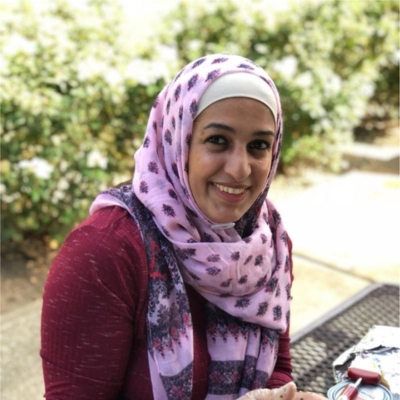
Reviewed by Asma Safi - English-Arabic Medical & Immigration Translator